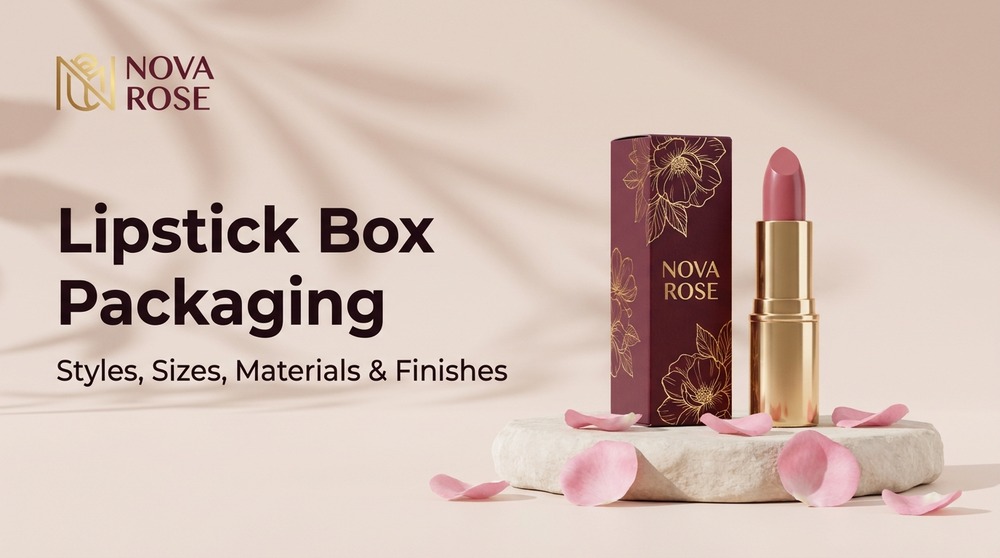
A lipstick is small, but its box does a lot of work. It protects a delicate bullet, tells shoppers who you are in about two seconds, and decides whether your product feels like a $6 drugstore pick or a $40 luxury buy. If you are planning a lipstick box for a new or existing beauty brand, this guide walks through the decisions that matter most: style, size, material, finish, and cost.
Why the Lipstick Box Matters
Most shoppers meet your lipstick box before they ever touch the lipstick. On a retail shelf it competes with dozens of similar products. In an online order it is the first thing a customer sees when they open the parcel. A well-made lipstick box does three jobs:
- Protects the product. Lipstick bullets can snap, smear, or melt. A snug box with the right insert reduces damage in shipping and handling.
- Sells the brand. Color, typography, and finish signal your price point and personality before the customer reads a word.
- Creates the unboxing moment. For social-first beauty brands, a satisfying open is free marketing.
Good beauty product packaging is not about spending the most. It is about making each choice below fit your brand and budget.
Popular Lipstick Box Styles
The style you pick affects cost, protection, and how premium the box feels.
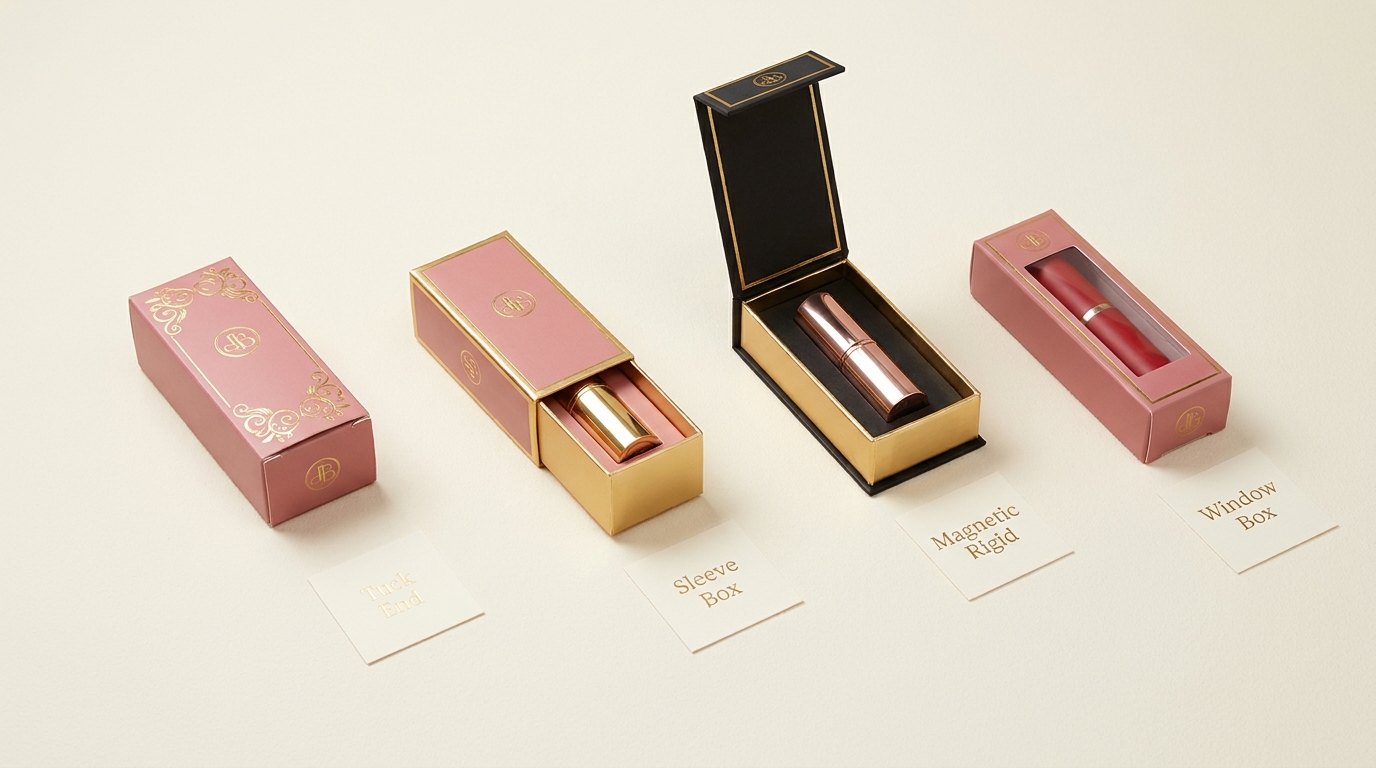
Tuck end boxes. The classic folding carton with a flap that tucks into the front. They are economical, ship flat, and are easy to print on. This is the most common choice for retail lipsticks.
Sleeve boxes. A tray slides out of an outer sleeve. They feel more special than a tuck end and work well for limited editions and gift sets.
Magnetic closure rigid boxes. Thick rigid board with a magnet closure. These are the go-to for luxury lines, influencer PR kits, and gift sets. They cost more per unit but make a strong first impression.
Window boxes. A cut-out lets shoppers see the shade. Useful when color is the main selling point, though the window film must be planned into the dieline.
Display and counter boxes. Several lipsticks sit in one box for countertops or store shelves. Useful for wholesale and retail rollouts.
If you want to compare more formats beyond lipstick, our custom cosmetic boxes page covers the full range of makeup packaging boxes.
Choosing the Right Size
A box that is too loose lets the tube rattle. One that is too tight is hard to pack and can crush the cap. The reliable approach:
- Measure the finished tube, including the cap, at its widest and tallest points.
- Add clearance. Most manufacturers recommend a small gap on each side so the tube slides in and out smoothly. Your packaging partner can advise the exact allowance for your board thickness.
- Request a white sample. A blank prototype lets you test the fit with a real tube before you pay for a full print run.
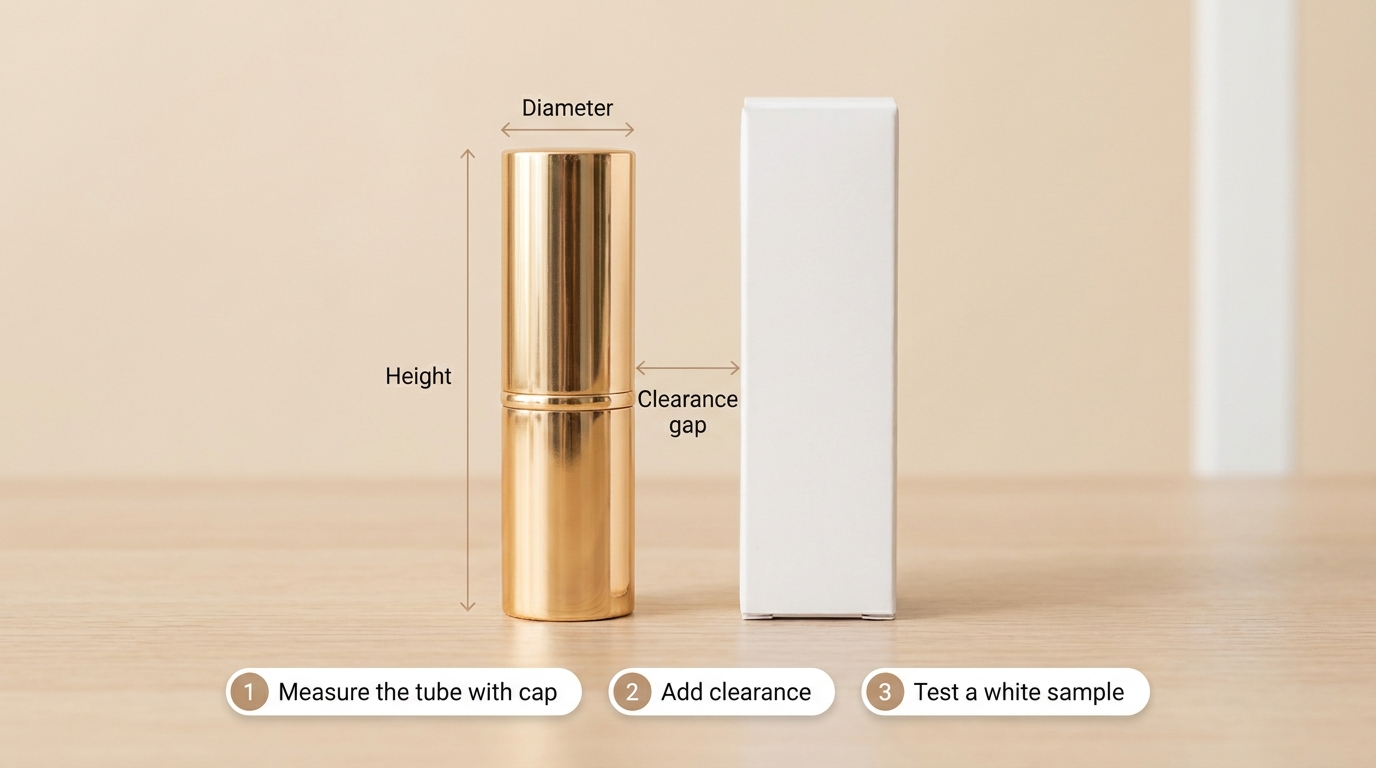
The most common mistake new brands make is ordering a print run based on the tube’s catalog dimensions. Tubes from different suppliers vary by a few millimeters, and that is enough to ruin a fit. Always measure the actual tube you will use.
Materials: What Your Box Is Made Of
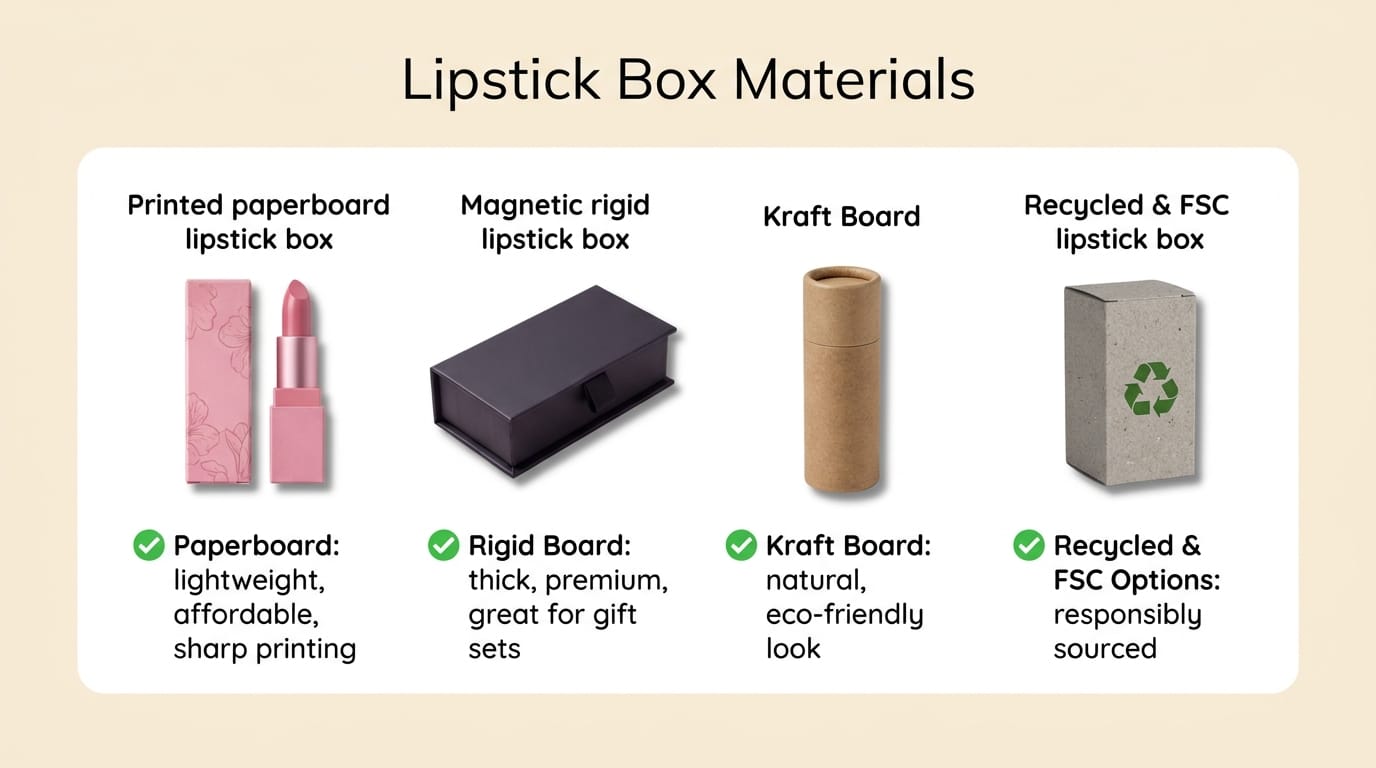
Paperboard (folding carton). Lightweight, affordable, and excellent for sharp printing. The standard choice for most lipstick boxes.
Rigid board. Much thicker and sturdier, often wrapped in printed or textured paper. Best for premium and gift lines.
Kraft board. Unbleached, natural-looking board. A strong fit for eco-conscious brands that want an earthy, honest look.
Recycled and FSC-certified options. Many beauty shoppers now look for recyclable or responsibly sourced packaging. If sustainability is part of your brand story, ask your supplier what certifications they can provide and keep the claims on your box accurate.
Finishes That Elevate a Lipstick Box
Finishes are where a simple box becomes a luxury one. They are also where costs climb, so choose with intent. Whether you order custom printed cosmetic boxes for retail or a small premium run, the same options apply.
- Matte or soft-touch lamination: a velvety feel that suits modern, minimal brands.
- Gloss lamination: vibrant color and a polished look.
- Foil stamping: metallic gold, silver, or rose gold for logos and accents. A classic for luxury beauty packaging.
- Embossing and debossing: raised or pressed designs that add texture you can feel.
- Spot UV: a glossy coating on selected areas, often laid over a matte background for contrast.
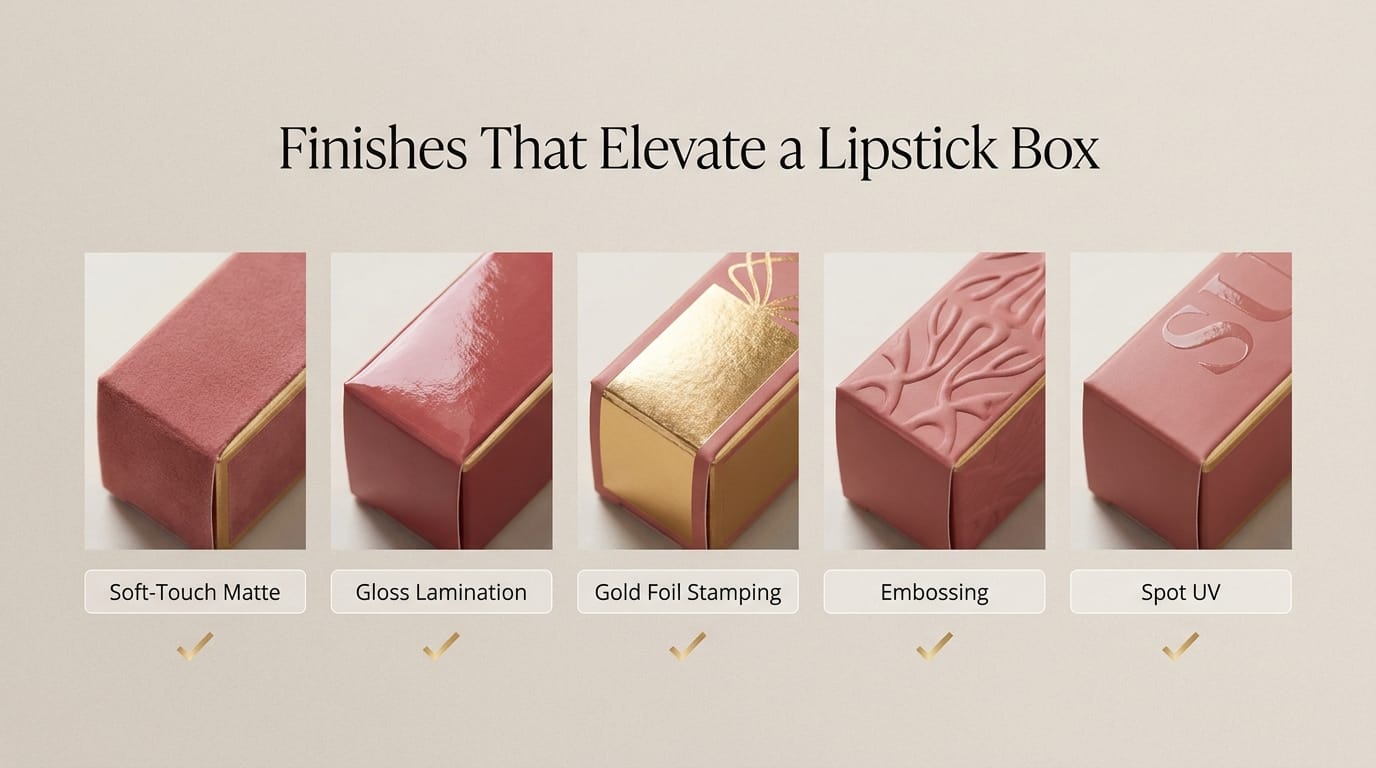
A good rule is to use one or two finishes well rather than all of them at once. A matte box with a single foil logo often looks richer than a box covered in effects.
Design Tips for Lipstick Packaging
Strong cosmetic packaging design is mostly about restraint and clarity.
Lead with your logo and shade name. Shoppers should know the brand and the color at a glance. Shade names and swatches deserve a clear spot on the front or side.
Use a limited palette. Two or three colors keep the box cohesive and easier to print consistently.
Keep text legible. Small boxes mean small type. Pick fonts that stay readable at tiny sizes, and avoid thin strokes on dark backgrounds.
Build lipstick branding into every detail. The box, the tube, the label, and your website should feel like one family. If you use custom lipstick tube labels, match their fonts and colors to the box.
Plan for color accuracy. Printed color can differ from what you see on screen. Ask for a printed proof, especially for brand-critical colors.
Labeling Basics for Cosmetic Boxes
Cosmetic labeling rules differ by country, and in the United States the FDA sets requirements for items such as the product identity, net contents, ingredient list, and manufacturer or distributor information. Because rules change and depend on your product and market, check the current guidance on the FDA website or with a regulatory specialist before finalizing artwork. Your packaging supplier can build the dieline with space for these panels, but the content itself is your responsibility.
What Affects the Cost of Custom Lipstick Boxes
Pricing varies a lot, and these are the factors that move it most:
- Quantity. Larger runs lower the cost per box.
- Box style. Tuck end boxes cost less than rigid magnetic boxes.
- Material and thickness.
- Finishes. Foil, embossing, and spot UV each add cost.
- Inserts. Custom inserts add protection and cost.
- Number of colors and print method.
If you are ordering for the first time, ask for quotes at two or three quantity levels. The price drop between them often surprises people. You can get a custom quote with your quantity and finish options in one request.
From Idea to Finished Box: The Process
- Share your tube dimensions and brand artwork.
- Receive a dieline showing every fold, cut, and panel.
- Place your artwork on the dieline.
- Approve a sample or printed proof.
- Go into production once colors and fit are confirmed.
- Delivery and quality check.
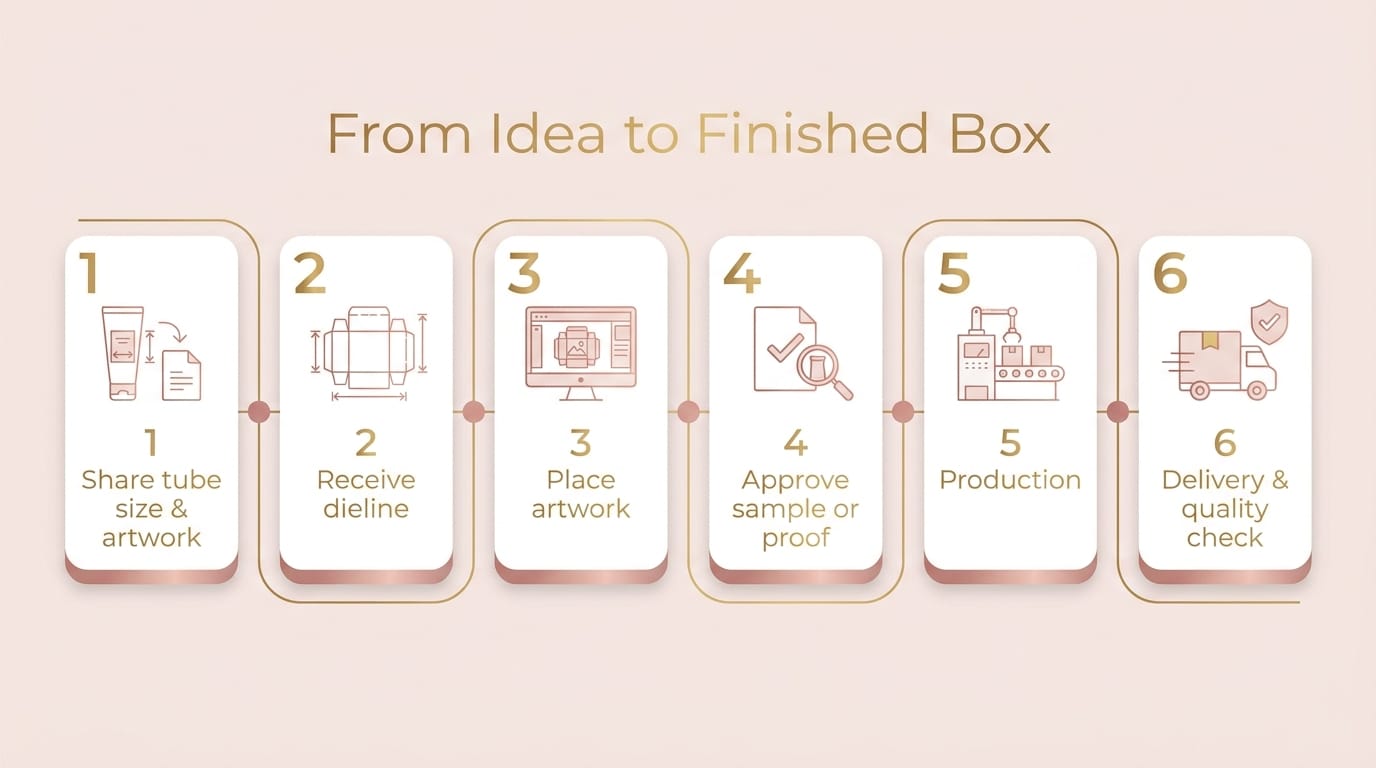
Taking time at the sample stage is the cheapest insurance you can buy against reprints.
Frequently Asked Questions
What is the best material for a lipstick box?
For most brands, paperboard is the best balance of cost and print quality. Choose rigid board for premium or gift lines, and kraft for a natural, eco-focused look.
What size should a lipstick box be?
It depends on your actual tube. Measure the tube with its cap, add a small clearance, and test with a white sample before printing.
Which finish looks the most luxurious?
Soft-touch lamination paired with foil stamping or embossing is a popular combination for premium beauty packaging.
Can I order a small quantity of custom lipstick boxes?
Minimum order quantities vary by style and printing method. Ask your supplier what is possible for your first run.
Do lipstick boxes need an insert?
Not always. Tuck end boxes often fit snugly without one. Insert trays are common in rigid boxes and gift sets, where the product needs to stay in place.
Ready to Design Your Lipstick Box?
HM Custom Packaging can help you move from idea to a finished box, from choosing a style and size to finishes and printing. Request a quote and tell us your tube dimensions, quantity, and the look you want.